
Introduction
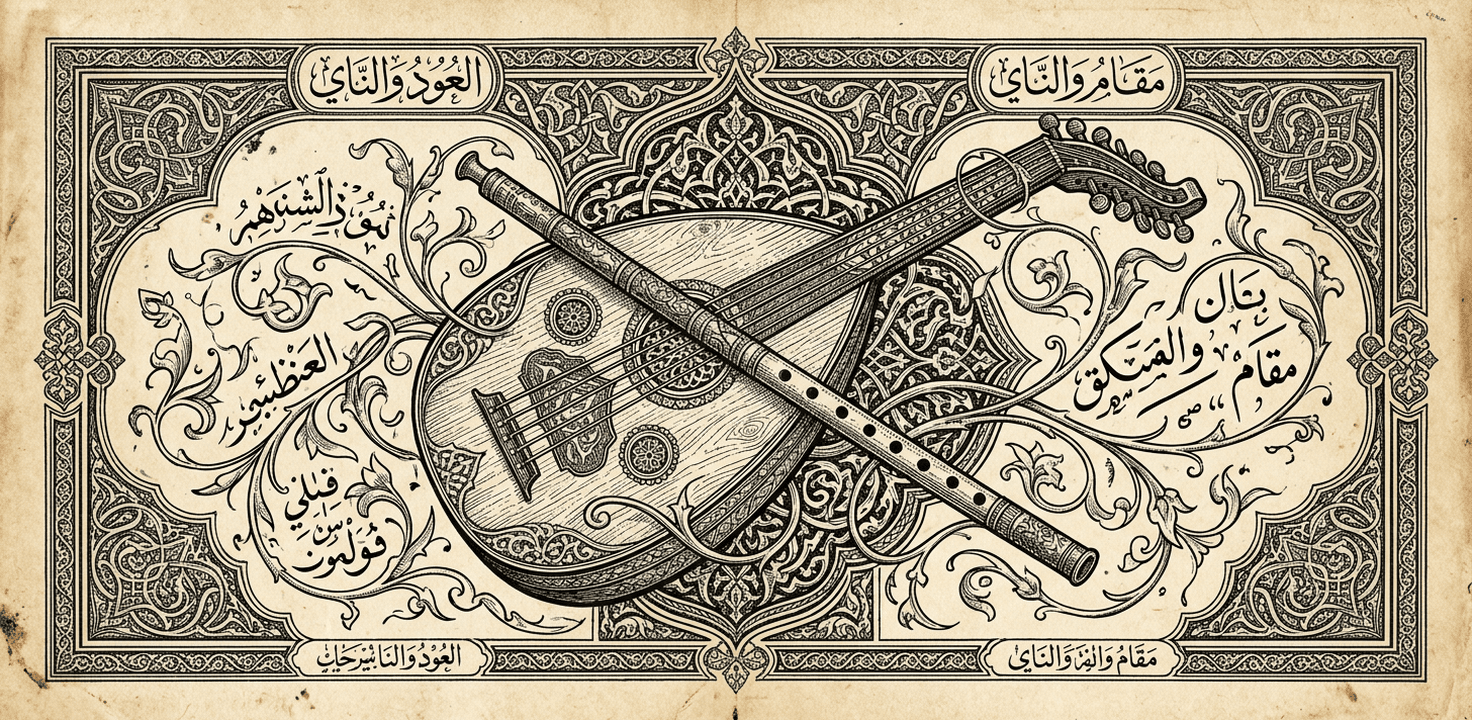
Maqam Bayati Shuri is one of the most beautiful and widely used maqamat in traditional Arabic music. As a branch of the prestigious Bayati family, it uniquely blends the warmth of authentic Bayati with the passionate intensity of Hijaz, creating a rich musical color that captivates listeners' hearts.
Etymology
The name "Bayati Shuri" traces back to historic Baghdad, where the district of "Shurja" (or Shuri) was an important commercial and musical center. This maqam emerged as an evolution of the original Bayati in Iraqi and Levantine vocal schools, then spread throughout the Arab world.
Theoretical Structure
Maqam Scale
Maqam Bayati Shuri begins with the Jins Bayati on the tonic, followed by Jins Hijaz on the fourth degree (the ghammaz). This combination creates a distinctive musical effect that merges:
- Lower Jins Bayati: D, E half-flat, F, G
- Upper Jins Hijaz: G, A flat, B flat, C, D
Scale Degrees
| Degree | Arabic Name | Western Notation | Interval from Previous |
|---|---|---|---|
| 1 | D (Tonic) | D | - |
| 2 | E half-flat | E♭½ | 3/4 tone |
| 3 | F | F | whole tone |
| 4 | G (Ghammaz) | G | whole tone |
| 5 | A flat | A♭ | half tone |
| 6 | B flat | B♭ | whole tone |
| 7 | C | C | whole tone |
| 8 | D (High) | D | whole tone |
Distinguishing Features
What distinguishes Bayati Shuri from the original Bayati:
- The fifth degree (G) is lowered by a half step - becoming A-flat instead of natural A
- Jins Hijaz on the ghammaz (fourth degree) - giving it the distinctive Hijazi character
- The bridge between Bayati warmth and Hijaz passion in harmonious musical expression
Maqam Sayr (Melodic Development)
Ascending Path
The sayr typically begins by establishing the tonic (D) in the lower Jins Bayati, then gradually moves toward the ghammaz (G) to enter the Hijaz territory.
Common Modulations
- Bayati Shuri ↔ Hijaz: When focusing on the fifth degree
- Bayati Shuri ↔ Nahawand: By changing the upper jins
- Bayati Shuri ↔ Ajam: In the higher octave (jawab)
Use in Arabic Musical Heritage
Maqam Bayati Shuri is beloved in:
- Andalusian Muwashshahat: Especially in Aleppian and Levantine traditions
- Adwar: Traditional art songs of the Eastern Takht
- Folk Songs: Syrian and Iraqi folk music
- Taqasim: Oud, qanun, and nay improvisations
- Religious Recitation: In some Sufi rituals
Notable Musical Examples
Muwashshahat
- "Hibbi Da3ani" - The famous Andalusian muwashshah in Bayati Shuri
- "Qad Aah Ya Helu" - Authentic Syrian folklore
Modern Songs
- "Mudhnak" by Sabah Fakhri (variations in Bayati Shuri)
- "Dhayyat Mustaqbal Hayati" by Sayyid Darwish
- "Qad Habibi Ghab" - performed by Mohamed Khairy
Taqasim
- Taqasim by Sabri al-Sinati on oud
- Taqasim by Nai Barghouti on nay
Emotional Characteristics
Maqam Bayati Shuri reflects a unique blend of emotions:
| Aspect | Effect |
|---|---|
| Warmth | The original Bayati warmth provides a sense of comfort |
| Passion | The Hijaz character adds energy and longing |
| Complexity | The quarter-tone intervals create a mysterious color |
| Beauty | The harmony between the two ajnas creates special charm |
Tips for Practitioners
For Instrumentalists
- Practice the ghammaz transition: G is the meeting point between Bayati and Hijaz
- Focus on the E half-flat: This gives the authentic Bayati flavor
- Use A-flat carefully: This is the distinguishing degree that gives the "Shuri" sound
For Singers
- Start gradually: Move from the jawab to the tonic to reach emotional peaks
- Sing with Bayati touches in the beginning, then transition to Hijaz passion
- Use Rast ornaments when moving to the high jawab
Conclusion
Maqam Bayati Shuri is a testament to the richness of the Arabic maqam system and its ability to create new musical colors by blending different ajnas. This maqam combines authentic heritage with continuous musical evolution, making it one of the most important maqamat in contemporary Arabic music.
Discover more maqamat and the secrets of Arabic music with the Mynoota platform—your comprehensive guide to learning Arabic music.
Recommended Listening
- Samai Bayati Shuri by Sabah Fakhri Ensemble
- Taqasim on oud in Maqam Bayati Shuri
- Andalusian Muwashshahat from Aleppian tradition