Arabic Rhythms (Iqa'at): The Heartbeat of Eastern Music
Discover essential Arabic rhythms like Maqsum, Baladi, Malfuf, and Samai Thaqil, and their role in shaping the identity of Middle Eastern music

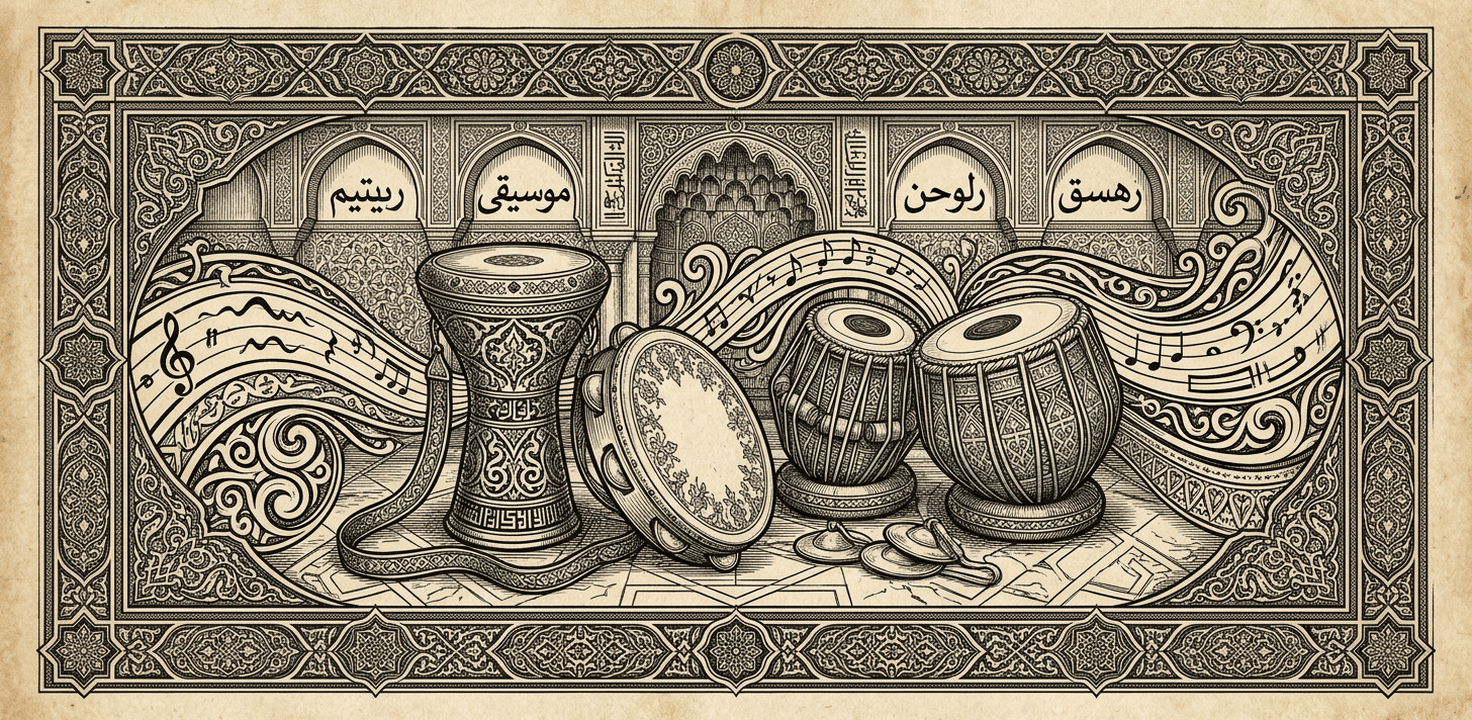
Arabic Rhythms (Iqa'at): The Heartbeat of Eastern Music
Arabic rhythms form the backbone of Middle Eastern music. They are not merely a temporal arrangement of notes, but rather the soul that gives Eastern music its vitality and uniqueness. Through rhythm, we can distinguish between joy and sorrow, between deep tarab (musical enchantment) and simple folk feeling, between Andalusian muwashshah and contemporary songs.
What Are Arabic Rhythms?
In Arabic music, rhythm is the system of beats and timing that guides a musical piece. It has evolved in Eastern culture to become a science in itself known as "Ilm Al-Iqa'" (the science of rhythm), which studies the distribution of strong and weak strikes within the musical meter.
Arabic rhythms are characterized by great diversity, ranging from simple patterns of two time units to complex patterns reaching up to 48 time units. It is estimated that there are over 100 Arabic rhythms, though many have fallen into disuse or disappeared entirely.
Famous Arabic Rhythms
1. Maqsum Rhythm - 4/4
Time Signature: 4/4 | Character: Danceable and lively
Beat Pattern: Dum tak tak dum tak
Maqsum is the most common rhythm in Middle Eastern music. It is used in modern songs, tarab music, and belly dance. It is characterized by its versatility and flexibility, making it easy to transition to and from other rhythms like Baladi and Wahda.
Famous Examples:
- "Alb Ya'shaq Koll Gamil" (The Heart Loves All Beauty) - Umm Kulthum
- "Darat Al-Ayam" (Days Have Turned) - Umm Kulthum
- "Qari'at Al-Fingan" (The Coffee Cup Reader) - Abdel Halim Hafez
2. Baladi Rhythm - 4/4
Time Signature: 4/4 | Character: Folk and cheerful
Beat Pattern: Dum dum tak dum tak tak
The name "Baladi" comes from the word "balad" meaning "country" or "folk," and it is an authentic Egyptian folk rhythm. It is widely used in Egyptian folk dances and folkloric songs. It is considered the preferred rhythm for professional dancers in belly dance performances.
Characteristics:
- Heavy at the beginning (dum dum)
- Full of energy and vitality
- Often played on the Tabl Baladi (folk drum)
3. Malfuf Rhythm - 2/4
Time Signature: 2/4 | Character: Fast and energetic
Beat Pattern: Dum tak tak
Malfuf (meaning "wrapped" or "surrounded") is a fast rhythm used as an introduction to musical pieces or for a dancer's entrance. It gives a feeling of activity and vitality, though overuse can tire the listener.
Uses:
- Orchestra introductions
- Dancer entrances
- Fast-paced songs
4. Wahda Kabira (Big Wahda) Rhythm - 4/4 or 8/4
Time Signature: 4/4 or 8/4 | Character: Classical and balanced
Beat Pattern: Dum... (only one strong accent at the beginning)
Wahda is primarily used in muwashshahat (classical Arabic song forms) and classical pieces. It is characterized by its simplicity, allowing the singer to showcase vocal abilities without rhythmic interference.
Uses:
- Andalusian muwashshahat
- Vocal improvisations (taqasim)
- Classical Arabic music
5. Sa'idi Rhythm - 4/4
Time Signature: 4/4 | Character: Folkloric and desert-like
Beat Pattern: Dum tak dum dum tak
Sa'idi comes from Upper Egypt (the south), and is a folkloric rhythm reflecting the culture and heritage of the Sa'idi people. It is used in Sa'idi dances and stick dancing (tahtib).
Characteristics:
- Strong and heavy
- Reflects the desert nature of Upper Egypt
- Used in the famous stick dance
6. Samai Thaqil Rhythm - 10/8
Time Signature: 10/8 | Character: Spiritual and Sufi
Beat Pattern: Dum tak tak dum tak dum tak tak
Samai Thaqil is one of the complex rhythms, widely used in muwashshahat and Sufi songs. It is characterized by its deep spiritual nature and connection to Sufi and Andalusian music.
Uses:
- Andalusian muwashshahat
- Sufi samai ceremonies
- Complex classical music
7. Dawr Hindi Rhythm - 7/8
Time Signature: 7/8 | Character: Mysterious and experimental
Dawr Hindi is a complex rhythm with a unique time signature (7/8), used in experimental pieces and artistic improvisation. It gives a sense of mystery and suspense.
The Relationship Between Rhythms and Maqamat
Maqamat (melodic modes) and rhythms form two essential wings of Eastern music:
| Maqam | Rhythm | Resulting Feeling |
|---|---|---|
| Rast | Baladi | Joy and happiness |
| Saba | Wahda Kabira | Sadness and longing |
| Hijaz | Samai Thaqil | Deep spirituality |
| Bayati | Maqsum | Warmth and emotion |
Through this combination of maqam and rhythm, Arabic music succeeds in conveying emotions with the finest details.
Arabic Percussion Instruments
1. Darbuka (Goblet Drum)
The most famous percussion instrument in the Middle East, made of clay or metal, played with both hands.
2. Riqq
A small tambourine with cymbals, used in classical music.
3. Tabl Baladi (Folk Drum)
A large drum carried on the shoulder and played with a stick, used in folk rhythms.
4. Daf
A wide percussion instrument used in Sufi music.
5. Cajon
A wooden box used in modern music.
How to Learn Arabic Rhythms?
1. Repeated Listening
Listen to classical music and tarab songs to recognize different patterns.
2. Clapping and Counting
Count rhythms with your hands using "dum" and "tak" as symbolic sounds:
- Dum: for the strong accent (bass)
- Tak: for the light accent (treble)
3. Practical Playing
Use an instrument like the darbuka or cajon to apply rhythms practically.
4. Learning from Reliable Sources
Use apps like Iqa'at or music education platforms to deepen your understanding of rhythms.
History of Arabic Rhythms
The roots of Arabic rhythms extend back thousands of years. In ancient times, Arabs used tambourines and drums in celebrations and rituals.
The Abbasid and Andalusian Periods
During this period, Ilm Al-Iqa' began to crystallize with the first scientific classification of rhythms:
- Samai Thaqil rhythm in muwashshahat
- Wahda rhythm in tarab maqamat
- Dawr and Quddud rhythms in the Levant and Egypt
The Modern Era
Arabic rhythms have drifted into new patterns such as Arabic pop and electronic music, without losing their original identity.
Summary Table of Essential Rhythms
| Rhythm | Time Signature | Usage | Difficulty |
|---|---|---|---|
| Maqsum | 4/4 | Modern songs, tarab, dance | Easy |
| Baladi | 4/4 | Folk music, belly dance | Easy |
| Malfuf | 2/4 | Introductions, fast entrances | Easy |
| Wahda | 4/4 | Muwashshahat, classical music | Medium |
| Sa'idi | 4/4 | Sa'idi folk, stick dance | Medium |
| Samai Thaqil | 10/8 | Muwashshahat, Sufi | Hard |
| Dawr Hindi | 7/8 | Experimental, improvisation | Hard |
Conclusion
Arabic rhythms are a rich musical treasure that reflects the history, culture, and identity of the region's peoples. From the simple Maqsum to the complex Samai Thaqil, each rhythm carries within it a unique story, mood, and feeling.
Whether you are a beginner or professional musician, understanding Arabic rhythms opens new horizons in the world of Eastern music and gives you the key to express your emotions in a universal musical language.
Sources and References
- Maqam World - Rhythms Guide
- Wikipedia - Rhythm in Arabic Music
- IZIF - Arabic Rhythms
- Al Siadi - Arabic Rhythms
- Arab Instruments - Darbuka Rhythms
Did you enjoy this article? Share it with those interested in Arabic music, and discover more articles about maqamat and Eastern music on the MyNoota blog!