The Ney: The Soul of the East in a Reed Flute
Explore the ancient history of the ney, the oldest wind instrument in Arabic music, its spiritual role in Sufi tradition, and its place in authentic Arabic music

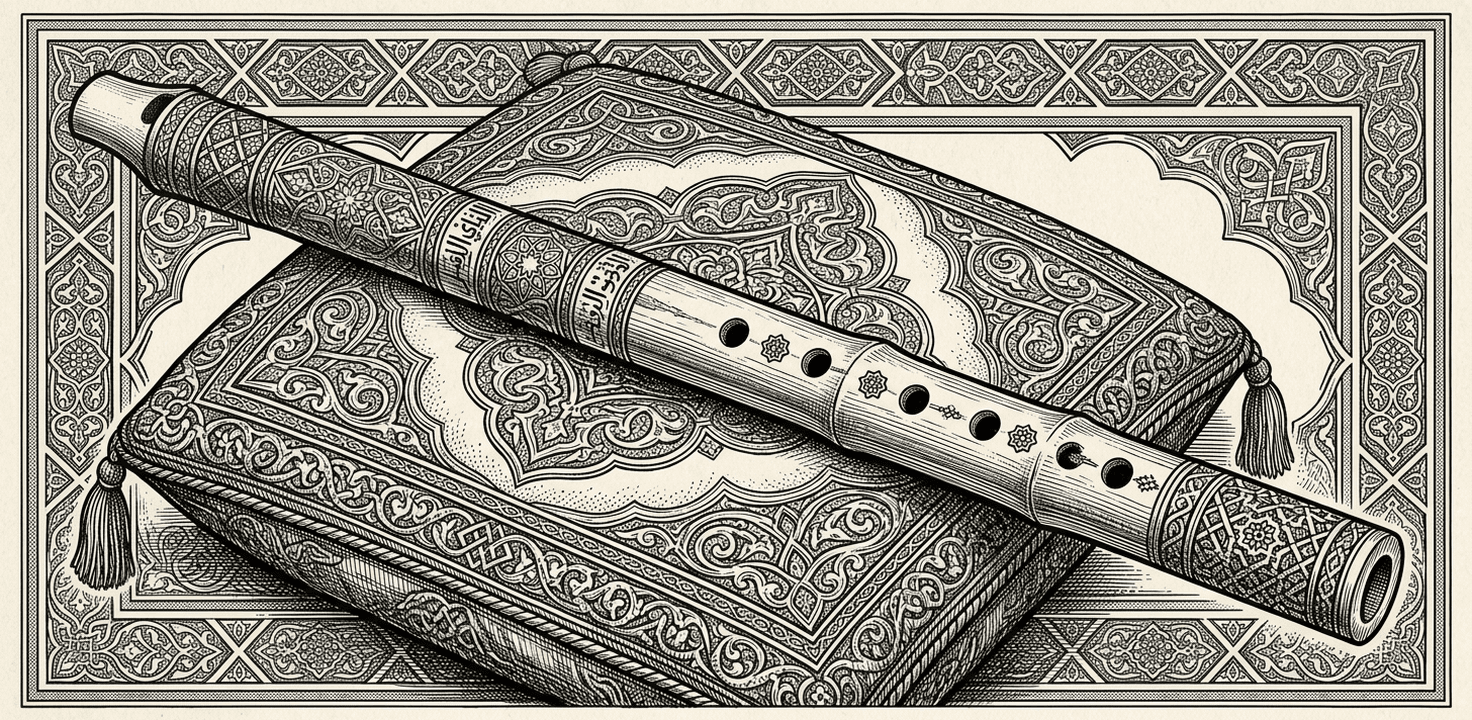
The Ney: The Soul of the East in a Reed Flute
Introduction
The ney is one of the oldest musical instruments in human history—a wind instrument simple in construction, profound in impact, and rich in history. Known as the "Lover of the Soul" and the "Voice of the Desert," the ney has for thousands of years been a sound that expresses the deepest human emotions.
Historical Origins of the Ney
The history of the ney dates back more than 4,500 years, with traces found in excavations in ancient Egypt and Mesopotamia (Iraq). It was mentioned in Pharaonic Egyptian inscriptions from around 3000 BCE, making it one of the oldest musical instruments still in use today.
The ney spread across the Middle East and the Mediterranean, becoming an essential part of Arabic, Persian, Turkish, and Kurdish music. In each culture, musicians added their own touches to develop playing techniques and musical traditions associated with it.
Construction of the Arabic Ney
Materials and Manufacturing
The Arabic ney is traditionally made from Arundo donax reed, a plant that grows on riverbanks. The craftsman selects a long reed with thick, compact walls, typically between 50 to 70 centimeters in length.
Structure
The Arabic ney consists of:
- A hollow cylindrical body open at both ends
- Six front finger holes
- One back hole for the thumb
- The mouth hole at the top, blown across its sharp edge directly without a mouthpiece
Types of Arabic Ney
Arabic neys are made in seven main degrees, named after maqamat:
- Ney Rast (C) - The longest and lowest
- Ney Dukah (D) - The most common
- Ney Busalik (E)
- Ney Jaharkah (F)
- Ney Nawa (G)
- Ney Hussayni (A)
- Ney Ajam (B or B♭)
Differences Between Arabic, Turkish, and Persian Ney
| Feature | Arabic Ney | Turkish Ney | Persian Ney |
|---|---|---|---|
| Mouthpiece | Without mouthpiece | Has mouthpiece (başpare) | Without mouthpiece |
| Holes | 6-7 holes | 7 holes | 6 holes |
| Sound | Soft and melancholic | Strong and clear | Warm and deep |
| Usage | Arabic heritage | Ottoman and Sufi music | Persian classical music |
Playing Techniques on the Ney
Basics of Blowing
Ney playing depends on angled blowing across the edge of the top opening, with precise control of lip shape and air pressure. It takes years of training to master the proper "embouchure."
Microtones
One of the most important features of the ney is its ability to produce microtones (quarter tones) that form the basis of the Eastern maqam system. The player achieves this by partially covering holes or changing the blowing angle.
Ornamentation Techniques
- Vibrato: Vibrating the sound to add sadness or passion
- Attack: Changing the sharpness of the note at its beginning
- Gliding between notes: To produce a smooth, connected effect
The Spiritual and Sufi Role of the Ney
The Ney in Sufism
The ney holds a sacred place in Islamic Sufi heritage. Sufis compare the sound of the ney to the "Lament of Lovers," that deep longing to reach the Truth.
The Famous Example: Mawlana Jalal ad-Din Rumi
The great Sufi poet Jalal ad-Din Rumi opened his famous work "Masnavi" with a poem about the ney:
"Listen to the ney how it complains and tells the tale
It tells of separation from its gathering place"
In this poem, Rumi symbolizes the ney as the human soul longing to return to its divine source, just as the reed longs to return to its place of growth among the reed beds.
The Ney in Arabic Music
In Taqatiq and Mawawil
The ney played a pivotal role in classical Arabic music, especially in:
- Taqasim: Solo instrumental improvisations
- Muwashshahat: Ancient Andalusian song
- Taqatiq: Folk songs
Pioneers of Arabic Ney Playing
- Mohamed El-Bakkar: A pioneer of classical playing in Egypt
- Hassan Kassar: A distinguished Syrian player
- Noureddine Khourchid: Contributed to developing playing techniques
The Importance of the Ney in Ensemble Playing (Takht)
In the traditional Eastern Takht, the ney serves as the link between rhythmic and string instruments. The ney can:
- Present main melodic lines
- Embellish melodies with its flexible playing
- Perform extended taqasim demonstrating the player's skill
Maintenance and Care of the Ney
Tips for Preserving the Ney
- Avoid sudden temperature changes - can cause the reed to crack
- Store the ney in a dry place - humidity weakens the reed
- Regular internal cleaning - to remove moisture and dust
- Wrapping the ends - to protect them from cracking
Lifespan of the Ney
A good ney lasts between 5 to 15 years, depending on the quality of the reed and how it is used.
The Ney in the Modern Era
Global Influences
The ney has spread in world music, where it has been used in:
- Film soundtracks: Especially films about the Middle East
- World Jazz music: Blended with American jazz techniques
- Electronic music: Sound samples of the ney in modern productions
Modern Challenges
The ney faces challenges in maintaining its position:
- Fewer skilled craftsmen
- Difficulty of learning compared to modern instruments
- Competition from electronic instruments
Conclusion
The ney remains more than just a musical instrument; it is the voice of the Arab soul and a window into the depth of Eastern musical heritage. In a world where rhythm accelerates, the ney reminds us of the beauty of simplicity and the depth of longing. Whether in a classical music concert or a spiritual Sufi session, the sound of the ney continues to touch the depths of souls, carrying thousands of years of history and emotion.
Want to learn to play the ney? Follow our blog for more lessons and tips on traditional Arabic musical instruments.